
Anubis
| Anubis | |
|---|---|
| Game Modes | — |
| Scenario | — |
| Teams | — |
Overview
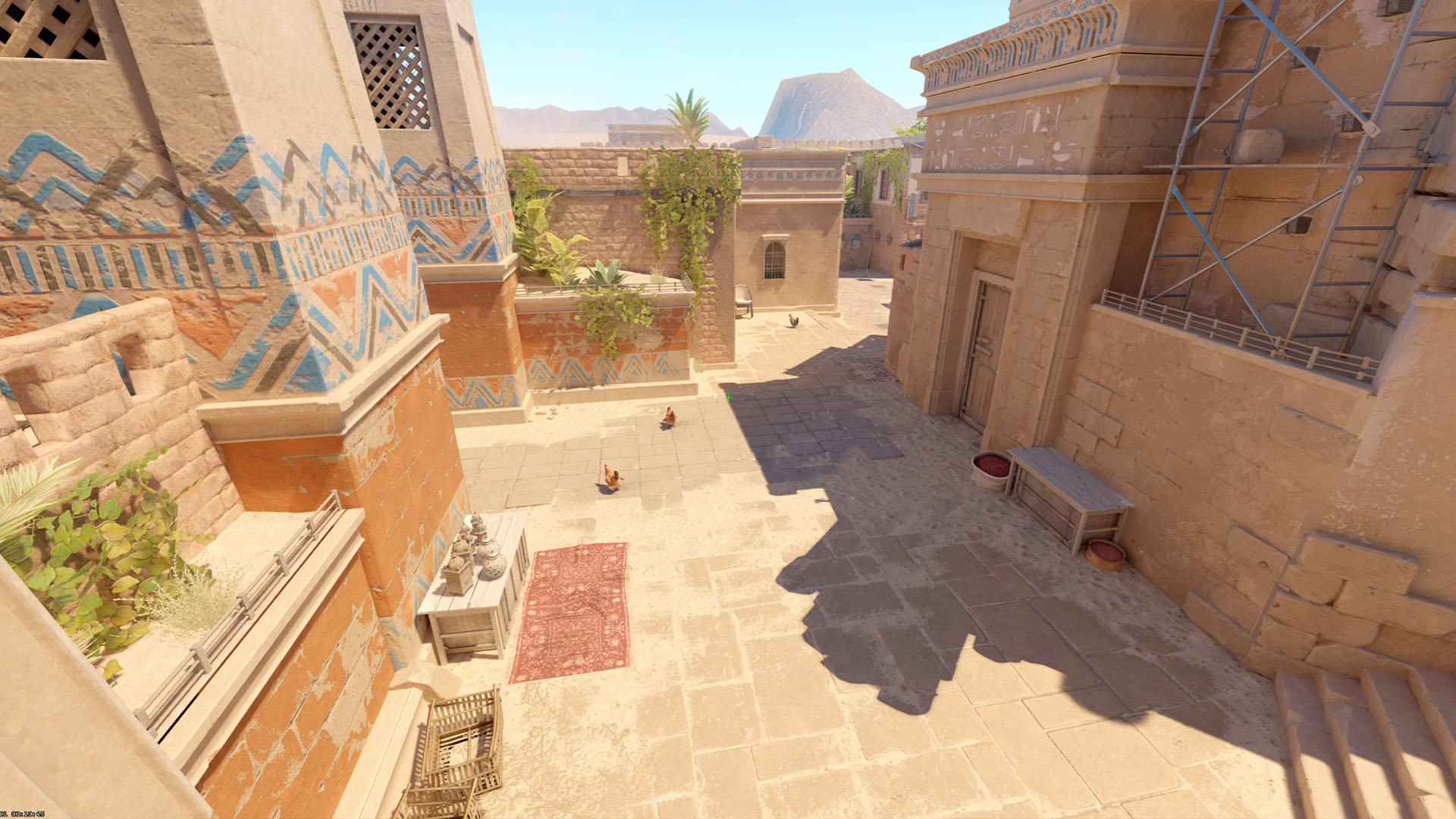
Anubis is a bomb defusal map set in an Egyptian archaeological excavation site, introduced in CS:GO's Operation Riptide in 2021. Created by Jakub Furtak and Roald van der Scheur, the same designers behind Ancient, the map features a distinctive layout with water channels, underground passages, and Egyptian-themed architecture. Anubis was added to the CS2 competitive map pool and has quickly become a fan favorite for its unique gameplay.
The map is characterized by its use of water as a gameplay element — players make splashing sounds when walking through water channels, adding an audio dimension to strategy. Anubis features a relatively open layout with long sightlines and multiple flanking routes, rewarding teams that can effectively use information and utility to control the map's many pathways.
In CS2, Anubis received the full Source 2 treatment with improved lighting and materials that bring the Egyptian setting to life. The map's competitive viability has grown as teams develop deeper understanding of its strategic possibilities.
Map Layout
Bombsite A
Bombsite A is set in an excavated temple area featuring pillars, elevated platforms, and the main site area. It is accessible through Main A and from the Palace connector coming from Mid. The site has strong CT positions including Throne (the elevated back position), and various pillar positions for crossfires. The A take requires coordinated utility to deal with the multiple angles CT defenders can hold.
Default plant is near the center of the site. Post-plant positions include Main A entrance, Palace, and behind the pillars scattered around the site.
Bombsite B
Bombsite B is located in a lower area near the water channels, accessible through B Main (a corridor from T side) and through the Canal area from Mid. The site features the Pillar area, back site positions, and the water channel that runs through the area. CT defenders hold from Site, Connector, and the elevated positions around the plant zone.
The default plant is in the sheltered area near the site center. The water in and around B site creates audio cues that can reveal player positions.
Mid
Mid on Anubis connects both sides of the map through a series of corridors, the Bridge area, and water channels. Taking Mid control provides Terrorists with access to flanking routes toward both sites. The Mid area features long sightlines where AWP duels frequently occur, and the water channels below provide alternative (but noisy) routing options.
Callouts
| Area | Callout | Description |
|---|---|---|
| A Site | Main A | The primary T-side corridor approaching A Site |
| A Site | Palace | The connector from Mid area toward A Site |
| A Site | Throne | The elevated back position on A Site |
| A Site | Pillars | The pillar structures on A Site providing cover |
| Mid | Bridge | The bridge area in the center of Mid |
| Mid | Canal | The water channel area running through the map |
| Mid | Ruins | The ruined structures in the Mid area |
| Mid | Connector | The passage connecting Mid to B Site |
| B Site | B Main | The main T-side corridor approaching B Site |
| B Site | Water | The water channel running through B Site |
| B Site | Back B | The back area of B Site near CT rotation paths |
| B Site | Boat | The boat near B Site used as a landmark |
Strategy
T-Side Defaults
A Fast Execute: Rush A Main with flashes and smokes blocking CT angles, overwhelm the site before rotations arrive. Effective on force-buy rounds.
Mid Control to Split: Three players take Mid with utility, then split toward A through Palace or B through Connector depending on CT setup. One player holds each main corridor for info.
Slow B Execute: Methodically take B Main control, smoke off rotations, and push through with coordinated utility while a teammate flanks through Canal.
CT-Side Setups
Standard 2-1-2: Two A (Site and Main), one Mid/Bridge for information, two B (Site and Main). The Mid player enables fast rotations.
Aggressive B Push: Push two CTs into B Main for early picks. The water around B provides audio cues for enemy approaches.
Mid Control: Hold Bridge aggressively with two players to deny T-side Mid access, forcing them into direct site hits.
Utility Guide
- A Main Smoke — From the T-side A approach, smoke the CT crossover angle on A Site before pushing.
- Bridge Smoke — From T side, smoke the Bridge to block the CT AWPer and enable safe Mid crossing.
- Canal Flash — Flash the Canal area before pushing through to catch CT players watching the water routes.
- B Main Molotov — Molotov the common CT peek position in B Main to clear aggressive defenders.
- Palace Smoke — After taking Mid, smoke Palace to isolate A Site from Mid flanks during an A execute.
History
Anubis was created by Jakub Furtak and Roald van der Scheur and debuted in CS:GO's Operation Riptide in September 2021. The map was well-received for its creative use of the Egyptian theme and innovative water mechanics. It was added to the CS2 competitive map pool, marking one of the newer additions to competitive Counter-Strike.
The map has undergone various balance adjustments based on community and professional feedback, particularly around sightlines and the timing of rotations. Anubis represents the evolving design philosophy of competitive Counter-Strike maps, incorporating environmental elements like water into gameplay mechanics.
Trivia
- Anubis is named after the ancient Egyptian god of mummification and the afterlife, and the map features numerous Egyptian mythological references.
- Walking through the water channels on Anubis creates splashing sounds that enemies can hear, adding a unique tactical layer to the map.
- Anubis and Ancient were created by the same pair of designers and share similar design philosophies regarding complex Mid areas.
- The map features a detailed archaeological excavation narrative told through environmental storytelling.
- Anubis is one of the few maps where environmental audio (water) plays a direct role in competitive strategy.