
Train
| Train | |
|---|---|
| Game Modes | — |
| Scenario | — |
| Teams | — |
Overview
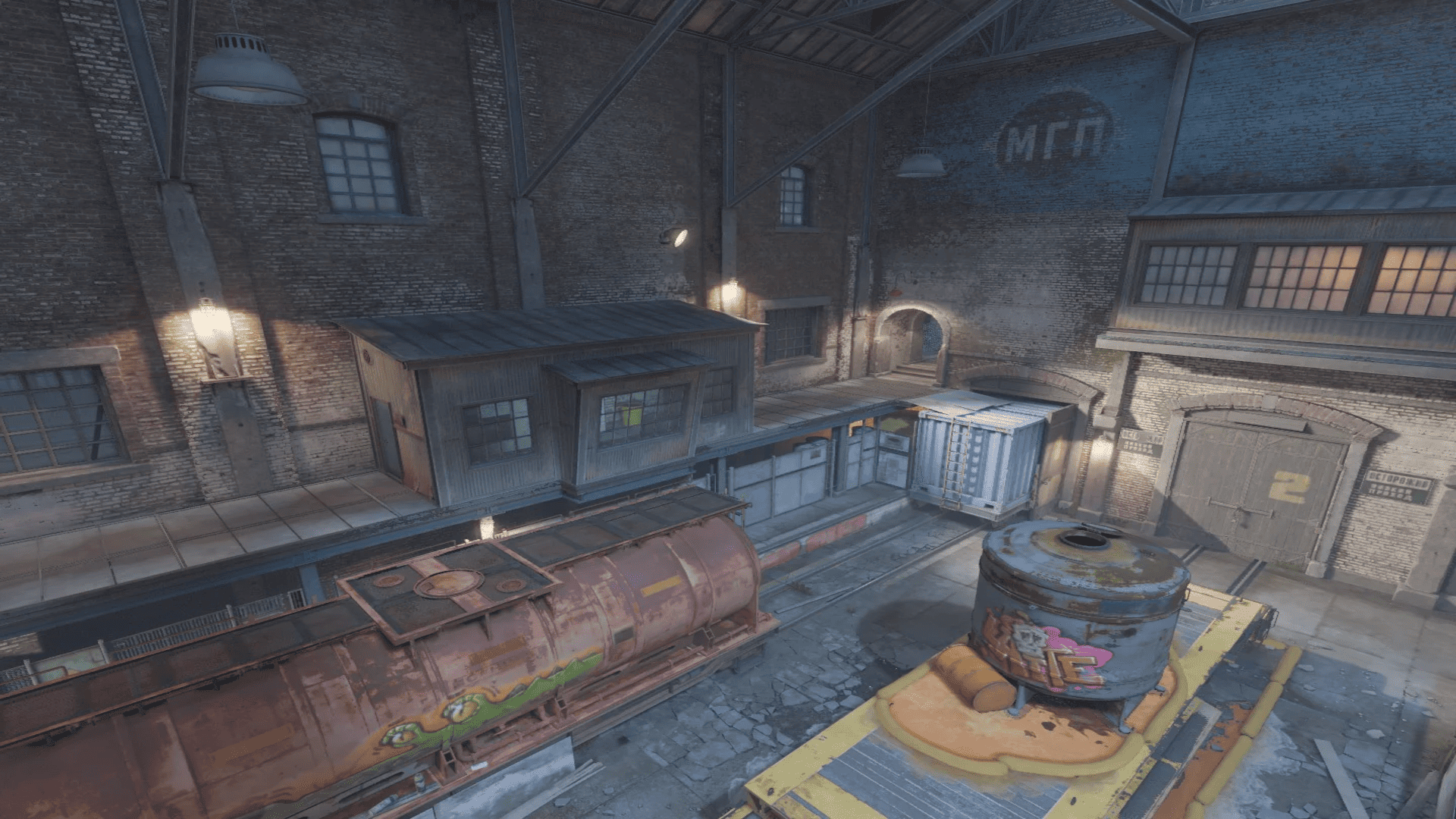
Train is one of the original Counter-Strike maps, set in a railway yard filled with train cars that create a complex network of cover, sightlines, and chokepoints. First appearing in Counter-Strike Beta 1.0 in 1999, Train has been a competitive staple through multiple iterations. The map is known for its tight corridors between trains, long sightlines, and emphasis on AWP play and utility management.
The defining feature of Train is its clustered bombsites among the train cars, which create a maze-like environment where every angle matters. Both bombsites are relatively close together, allowing for fast rotations but also making split attacks highly effective. Train has historically been a CT-sided map due to the strong defensive positions among the train cars.
Train was removed from the active competitive map pool in 2021 but returned in CS2. The map rewards teams with strong coordination, precise utility lineups, and the ability to clear angles methodically. The abundance of train cars and overhead positions creates an environment where positional awareness is paramount.
Map Layout
Bombsite A
Bombsite A is located among the train cars in the upper portion of the map. Access comes from Popdog (the ladder room), through Ivy (the long corridor on the T side), and from the Main Hall approach. The site features multiple train cars providing cover — E-Box, Default, and the surrounding cars create a web of angles. CT defenders play from Headshot Train, inside the trains, or from elevated positions. A site takes require clearing numerous hiding spots among the trains.
Default plant is between the trains at the center of the site. The complexity of the site makes post-plant positions strong for Terrorists who can set up crossfires between the train cars.
Bombsite B
Bombsite B is set among train cars in the lower portion of the map, accessed through Upper B (from the upper hall) and through Lower B (the lower corridor). The site features the Bomb Train (where the bomb is typically planted), Back Site, and Headshot positions among the cars. CT defenders hold from Site, the train car interiors, or the connector to A. B site is more enclosed than A and its narrow approaches make it vulnerable to defensive utility.
The default plant is on or near the Bomb Train. Retakes come from CT Spawn and through the connector from A.
Mid
Mid on Train consists of the central corridor connecting both bombsites, along with the connectors and the area around the Ivy approach. The ladder room (Popdog) provides an alternative route from lower to upper portions of the map. Control of the connector area between sites is critical for CT rotations, while T players use Ivy and the main corridors to establish map control.
Callouts
| Area | Callout | Description |
|---|---|---|
| A Site | Ivy | The long corridor on the T side approaching A |
| A Site | Popdog | The ladder room providing vertical transition near A |
| A Site | E-Box | The electrical box area on A Site |
| A Site | Default | The default plant area between the trains on A |
| A Site | Headshot Train | The train car providing a headshot angle on A Site |
| A Site | Main Hall | The main hall approach to A from T side |
| Transition | Connector | The corridor connecting A and B sites from CT side |
| Transition | Ladder / Popdog | The ladder room connecting upper and lower areas |
| Transition | Showers | The shower/locker area near the connector |
| B Site | Upper B | The upper corridor approach to B Site |
| B Site | Lower B | The lower corridor approach to B Site |
| B Site | Bomb Train | The central train car on B Site near the plant zone |
| B Site | Back Site / Back B | The back area of B Site near CT Spawn |
| B Site | Oil | The oil train/tank area near B Site |
| B Site | Heaven | The elevated position overlooking B Site |
Strategy
T-Side Defaults
Ivy to A: Two or three players push Ivy with smokes blocking long sightlines. Once Ivy is controlled, use it as a staging area for a split onto A through Ivy and from Main Hall.
B Execute: Rush B from Upper and Lower simultaneously with flashes and smokes. Overwhelm the typically two CT defenders before rotations arrive through Connector.
Default: Take Ivy control slowly, send one player to gather B info, and play for picks. Rotate toward the weakened site based on early-round information.
CT-Side Setups
Standard 2-1-2: Two A (E-Box/Headshot and Ivy-watching), one Connector/rotator, two B (Site and Upper). The Connector player rotates to whichever site is hit.
Aggressive Ivy: Push into Ivy aggressively to deny T-side map control. Getting picks in Ivy cripples T-side A executes.
B Stack: Three players on B with one playing close Upper for a pick. Strong against B-heavy teams, but leaving A exposed.
Utility Guide
- Ivy Smoke — From T side, smoke the long Ivy sightline to safely push through without being picked by a CT AWPer.
- Popdog Molotov — Molotov the top of the Popdog ladder to prevent CT aggression through the ladder room.
- A Site Flash — Flash from Main Hall over the trains to blind defenders playing among the train cars.
- E-Box Smoke — Smoke E-Box to block the strong defensive angle while executing onto A Site.
- B Upper Flash — Pop flash through Upper B to blind the CT defender watching the corridor entrance.
History
Train is one of the oldest maps in Counter-Strike, first appearing in Beta 1.0 in 1999. Created by Valve, the map has undergone dramatic transformations over the years, with the most significant being the complete CS:GO rework in 2014 that modernized the layout and visuals. The reworked version shifted from a gritty Eastern European setting to a cleaner industrial rail yard.
Train was part of the CS:GO competitive map pool for years before being removed in 2021 when Ancient was added. The map was reintroduced in CS2, and professional teams have had to relearn its nuances in the context of the new engine. Train's history spans the entire Counter-Strike franchise, making it one of the most enduring maps in competitive FPS history.
Trivia
- Train is one of the three original Counter-Strike maps still in the competitive rotation (along with Dust II, Inferno, and Nuke in various eras).
- The 2014 CS:GO remake completely changed Train's visual setting from a Russian/Eastern European rail yard to a more modern industrial facility.
- Popdog is named after a real-life reference and the ladder room has been a strategically important position across all versions of the map.
- Train's compact bombsites among the train cars create one of the most angle-heavy environments in competitive Counter-Strike.
- The map was removed from active duty in May 2021 and replaced by Ancient, before returning in CS2.