
Vertigo
| Vertigo | |
|---|---|
| Game Modes | — |
| Scenario | — |
| Teams | — |
Overview
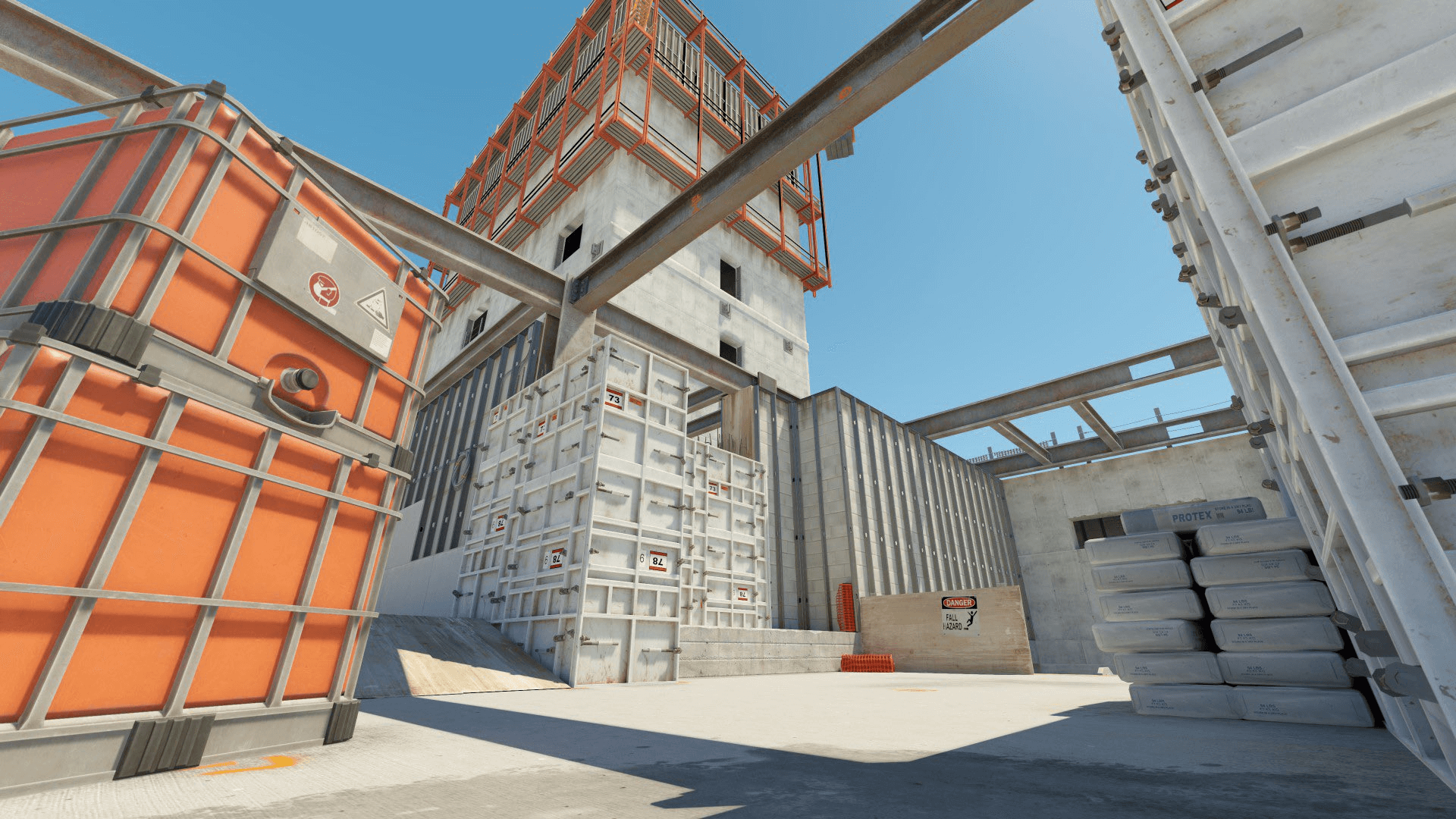
Vertigo is a bomb defusal map set on an unfinished skyscraper under construction, featuring unique verticality with two bombsites on different floors connected by internal stairways and ramps. Originally created by Chris Auty and first appearing in Counter-Strike 1.1 in 2001, Vertigo was dramatically reworked for CS:GO's competitive map pool in 2019 and continues to evolve in CS2.
The map's defining feature is its setting high above a city skyline, with open edges that allow players to fall to their death. The construction site theme provides a mix of tight interior corridors, open scaffolding areas, and vertical transitions between floors. Vertigo plays unlike any other map due to its compact size and the emphasis on close-quarters combat.
In CS2, Vertigo continues to be part of the competitive rotation, though it remains one of the more polarizing maps among professional players. Its compact layout and unusual geometry reward aggressive play and creative utility usage, while the fast rotation times make information gathering critical.
Map Layout
Bombsite A
Bombsite A is located on the upper floor of the building in an open area with construction scaffolding. It is accessible from the A Ramp (T-side approach) and through the interior hallways. The site features the Elevator area, the scaffolding at the edge of the building, and Default behind the construction materials. CT defenders play from Headshot (a narrow angle position), CT side, or aggressively on the Ramp. The open nature of the site and the danger of falling off the edge make for unique combat.
Default plant is near the center of the site behind cover. Post-plant positions include Ramp, Elevator, and the scaffolding edges.
Bombsite B
Bombsite B is on the lower floor in a more enclosed area near the building's interior. Access comes through the B Stairs from the upper floor and through the lower B corridor. The site features Box positions, Back Site, and various column structures. CT defenders hold from Boost (an elevated position), Site, and in the corridors leading to the site. B site fights tend to be close-quarters due to the enclosed nature of the lower floor.
Default plant is behind the boxes on site. The enclosed nature makes post-plant utility (molotovs and smokes) extremely effective.
Mid
Vertigo's Mid area consists of the central stairway system connecting the two floors, along with the corridors and catwalks that run between them. Control of the stairs and the interior hallways determines which bombsite the Terrorist team can effectively attack. The compact nature of the map means rotations are fast, making fakes and misdirection less effective than on larger maps.
Callouts
| Area | Callout | Description |
|---|---|---|
| A Site | A Ramp | The main ramp approach to A Site from T side |
| A Site | Elevator | The elevator area on A Site |
| A Site | Headshot | The narrow angle position on A Site |
| A Site | Scaffolding | The open scaffolding area at the edge of A Site |
| A Site | Default | The default plant position behind construction materials |
| Transition | Stairs | The central stairway connecting upper and lower floors |
| Transition | Mid | The corridors connecting the map's sections |
| Transition | Catwalk | The catwalk/walkway on the building's exterior |
| B Site | B Stairs | The stairs descending to B Site |
| B Site | Boost | The elevated position near B Site |
| B Site | Boxes | The box positions on B Site |
| B Site | Back B | The back area of B Site |
| B Site | Window | The window area near B Site |
Strategy
T-Side Defaults
Fast A: Rush the A Ramp with flashes, overwhelm the site before CTs can set up crossfires. The short distances on Vertigo make fast executes very effective.
B Split: Push B from the Stairs while simultaneously pushing through the lower corridor. Molotov common CT positions and flash the site.
Default: Spread across the map, take control of key positions, and wait for CT aggression. Play for picks and then execute onto the weakened site.
CT-Side Setups
Standard 2-1-2: Two A (Headshot and CT side), one Mid/Stairs, two B (Boost and Site). The compact map allows for fast rotations.
A Aggression: Push players onto the A Ramp for early engagements, disrupting T-side timing. Fall back to site after getting information.
B Stack: Stack B with three players. The enclosed site makes it easy to defend with utility, and the short rotations mean A can be supported quickly.
Utility Guide
- A Ramp Flash — Pop flash over the wall before pushing up A Ramp to blind defenders at Headshot and on site.
- Elevator Smoke — Smoke the Elevator area to block CT rotations and isolate A Site during an execute.
- B Stairs Molotov — Molotov the bottom of B Stairs to prevent CT pushes up the stairs.
- Catwalk Flash — Flash the Catwalk area before pushing to catch CTs holding aggressive angles on the exterior.
- Boost Smoke on B — Smoke the Boost position on B site to deny the elevated CT angle during an execute.
History
Vertigo was originally created by Chris Auty and appeared in Counter-Strike 1.1 in 2001 as a fun, unconventional map. For most of Counter-Strike's history, Vertigo was considered a casual map not suited for competitive play. This changed dramatically in 2019 when Valve reworked Vertigo and added it to the CS:GO competitive map pool, replacing Cache.
The competitive version of Vertigo has undergone more updates than almost any other map in the pool, with Valve frequently adjusting the layout based on professional feedback. In CS2, Vertigo continues to evolve and has developed a dedicated following among both players and spectators who appreciate its unique setting and fast-paced gameplay.
Trivia
- Vertigo is set on the top of an unfinished skyscraper, and players can see the city skyline far below — and can fall to their death off the edges.
- The map was considered a "troll pick" in matchmaking before its competitive rework in 2019.
- Vertigo has undergone more layout changes in the competitive pool than any other active map.
- The compact size of Vertigo means rounds tend to be shorter and more action-packed than on other competitive maps.
- Some professional teams have used Vertigo as a "curveball" pick to surprise opponents who may not have practiced it as extensively.